Hayabusa Bullet Train: Speed, Route, Ticket Price, Features & Fun Facts
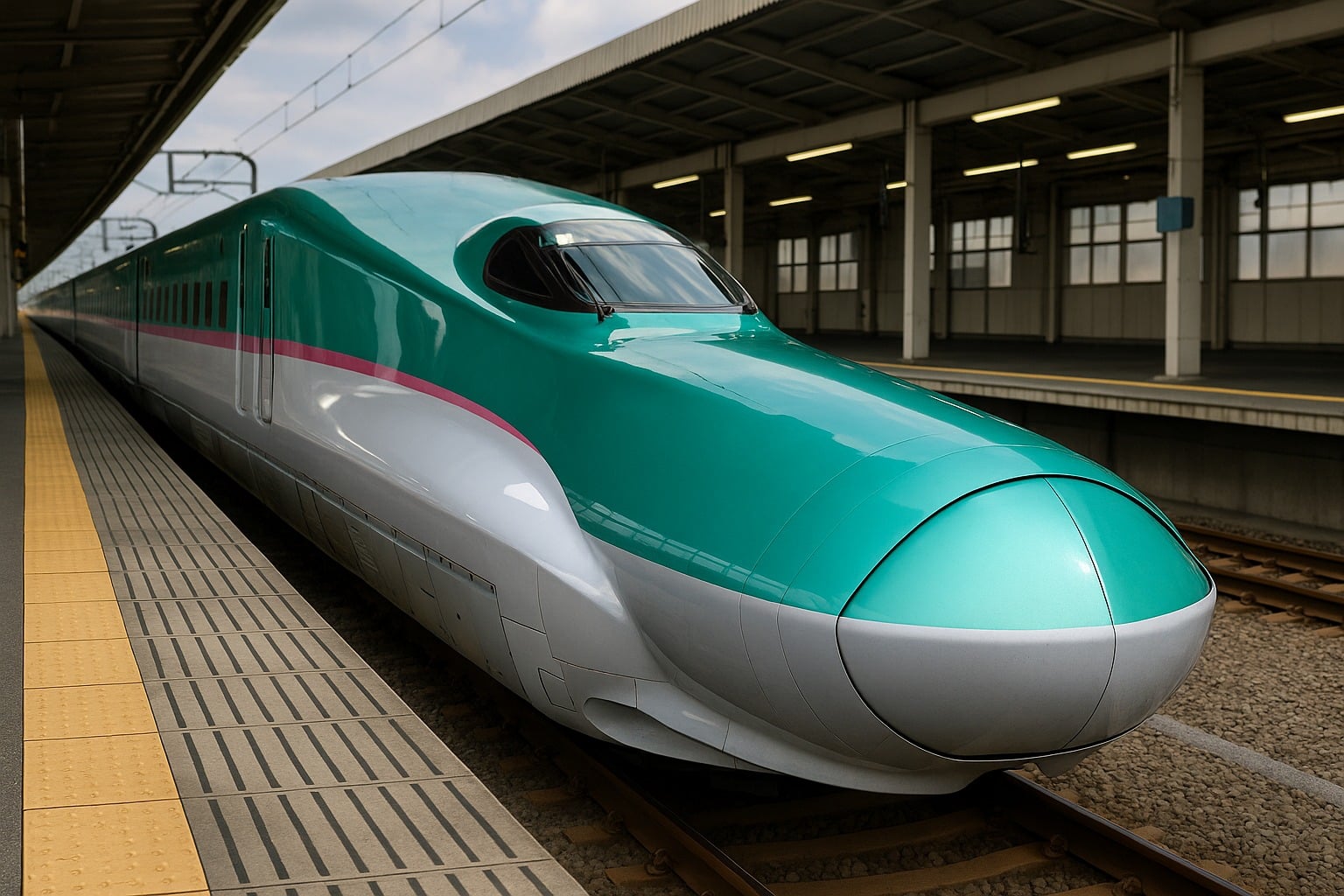
Hayabusa Bullet Train represents one of Japan’s most sophisticated, ultra-fast, premium high-speed trains. Running on the renowned Tohoku Shinkansen line, it’s famous for its cutting-edge design, luxury, comfort, and mind-boggling speed. Many train aficionados refer to it as the “Green Falcon of Japan,” due to its striking emerald-green exterior and sleek shape that significantly cuts down air resistance.
In this thorough guide, we’re diving into the speed of the Hayabusa bullet train, top speed, route, ticket prices, myths, movie mentions, toy versions, and how it compares to Nozomi & 500 km/h trains. Whether you’re a traveler, a train buff, or simply curious about the fastest trains around, this article lays it all out in an easy and engaging way.
Also, check out some useful guides on our website: Top Railway Stations in India with World-Class Facilities, IRCTC Tatkal Automation Tool, Railway Food Price List 2025–26, Ernakulam–Bengaluru Vande Bharat Timings, and more guides on Train360.
⭐ Google Featured Snippet Answer
The Hayabusa bullet train hits a top speed of 320 km/h (200 mph), making it one of the fastest Shinkansen trains in Japan. It operates on the Tohoku Shinkansen route from Tokyo to Shin-Aomori.
What Is the Hayabusa Bullet Train?
The Hayabusa Shinkansen is part of the premium E5 and H5 series of high-speed trains in Japan. Launched by JR East, this train emphasizes quiet performance, comfort, and effectiveness. It’s well-known for its distinctive “long nose” design, which helps minimize tunnel boom, cuts down on drag, and allows for extremely smooth high-speed travel.

The name “Hayabusa” translates to Falcon in Japanese — representing speed and swiftness.
Hayabusa Bullet Train Speed
Now, the burning question is:
How fast can the Hayabusa Bullet Train go?
The Hayabusa bullet train maintains a speed of 320 km/h (200 mph), making it the quickest operational Shinkansen service in Japan. That’s the maximum speed it keeps throughout its journey.
In test runs, E5 series trains have even hit 400 km/h, showcasing the incredible engineering behind the Hayabusa fleet.
Hayabusa Bullet Train Top Speed
Under normal commercial operations, the Hayabusa bullet train’s top speed is recorded at 320 km/h. At this pace, passengers hardly feel any vibration or noise inside the cabin, thanks to Japan’s top-notch track quality and advanced suspension systems.
Here are a few key factors that help achieve this top speed:

- A 55–60 feet long aerodynamic nose
- Low noise emission technology
- Advanced motors and braking systems
- Lightweight aluminum body
- Precision signaling systems
Hayabusa Bullet Train Route
The Hayabusa runs on the Tohoku Shinkansen line in Japan. Its main route is:
Tokyo → Ueno → Omiya → Sendai → Morioka → Shin-Aomori
Total route length: 674 km Total journey time: 3 hours – 3 hours 20 minutes
This route takes you through snowy areas, modern Japanese cities, and beautiful rural landscapes — making it one of the most scenic high-speed train rides globally.
Hayabusa Bullet Train Ticket Price
Ticket prices for the Hayabusa Shinkansen vary based on seat class and how far you’re traveling. Here’s a rough idea of the fares (for the route from Tokyo to Shin-Aomori):
| Class | Approx Price (JPY) | Approx Price (INR) |
|---|---|---|
| Ordinary Class | 16,000 – 17,000 | ₹9,000 – ₹9,800 |
| Green Class (Premium) | 22,000 – 23,000 | ₹12,000 – ₹13,000 |
| Gran Class (Luxury) | 27,000 – 28,000 | ₹15,000 – ₹16,000 |
Gran Class offers an exceptional rail experience, complete with reclining leather seats, tailored service, meals, and plenty of room.
Hayabusa Bullet Train Price (Manufacturing Cost)
A complete Hayabusa Shinkansen set is priced around US$50–55 million (roughly ₹420–450 crore). The high cost comes from advanced rail technology, aerodynamic design, and leading-edge safety systems.

Hayabusa Bullet Train Underwater – Fact or Fiction?
There’s a common belief that the Hayabusa travels underwater. This is not entirely accurate.
While the Hayabusa doesn’t dive below the ocean, it does pass through several deep tunnels beneath mountains, which gives the impression of underwater travel. The Shinkansen network includes routes that run alongside the ocean and through mountains, but the Hayabusa itself doesn’t go below sea level like a submarine would.
Hayabusa Bullet Train Toy – A Hit with Kids
The E5 Hayabusa toy models are super popular both in Japan and around the world. Companies like:
- Takara Tomy (Plarail)
- Bandai
- Kato Trains
create mini replicas, electric train sets, and collectible models.
Hayabusa Bullet Train in Movies
Even though the Hayabusa hasn’t starred in a Hollywood blockbuster like the Nozomi in “Bullet Train (2022),” it has made appearances in Japanese films, anime series, and documentaries focusing on high-speed rail technology.
You can see the train featured in:

- NHK documentaries in Japan
- Railway-themed anime
- Japanese transport films
Is Hayabusa Faster Than Nozomi?
No, the Nozomi on the Tokaido Shinkansen isn’t faster than the Hayabusa.
The Hayabusa can reach a top speed of 320 km/h, while the Nozomi’s highest operational speed is 285 km/h.
Winner: Hayabusa
Which Train Can Go 1000 km/h?
No current train can hit 1000 km/h. However:
- Japan’s Maglev L0 series achieved 603 km/h during tests (the fastest train in the world).
- Hyperloop prototypes are designed to reach 1000 km/h+, but none are operating commercially yet.
What Train Goes 500 km/h?
A few experimental trains have reached speeds of 500 km/h:
- Shanghai Maglev – 460 km/h (operational), 501 km/h (testing)
- JR Maglev L0 Series – 603 km/h (testing)
- CRRC Chinese Maglev – 500 km/h prototype
Regular wheel-based trains haven’t exceeded 450 km/h in commercial operations due to safety and track limitations.

Why Is the Hayabusa So Popular?
The Hayabusa has attained iconic status thanks to its:
- Blazing speed
- Scenic Tohoku route
- Quiet ride experience
- Futuristic aesthetics
- Luxurious seating arrangements
- Outstanding punctuality
Japan’s engineering prowess is a key reason the Hayabusa is admired worldwide.
Comparison Table: Hayabusa vs Nozomi vs Maglev
| Feature | Hayabusa | Nozomi | Maglev (L0) |
|---|---|---|---|
| Top Speed | 320 km/h | 285 km/h | 603 km/h (testing) |
| Technology | Wheel-based Shinkansen | Shinkansen | Magnetic Levitation |
| Comfort | ⭐⭐⭐⭐⭐ (Gran Class) | ⭐⭐⭐⭐ | Prototype only |
External Authoritative Sources
Frequently Asked Questions (SEO Optimized FAQs)
1. What is the top speed of the Hayabusa bullet train?
The Hayabusa bullet train operates at a top speed of 320 km/h in regular commercial service.
2. What route does the Hayabusa Shinkansen take?
It runs on the Tohoku Shinkansen line from Tokyo to Shin-Aomori.
3. Is the Hayabusa faster than the Nozomi Shinkansen?
Yes, the Hayabusa is faster at 320 km/h compared to Nozomi’s 285 km/h.
4. Does the Hayabusa run underwater?
No, it doesn’t run underwater. It only passes through deep tunnels beneath mountains.
5. What is the ticket price of the Hayabusa bullet train?
Ticket prices range from ¥16,000 to ¥28,000 based on class and distance.





1 thought on “Hayabusa Bullet Train: Speed, Route, Ticket Price, Top Speed & Full Details (2025)”