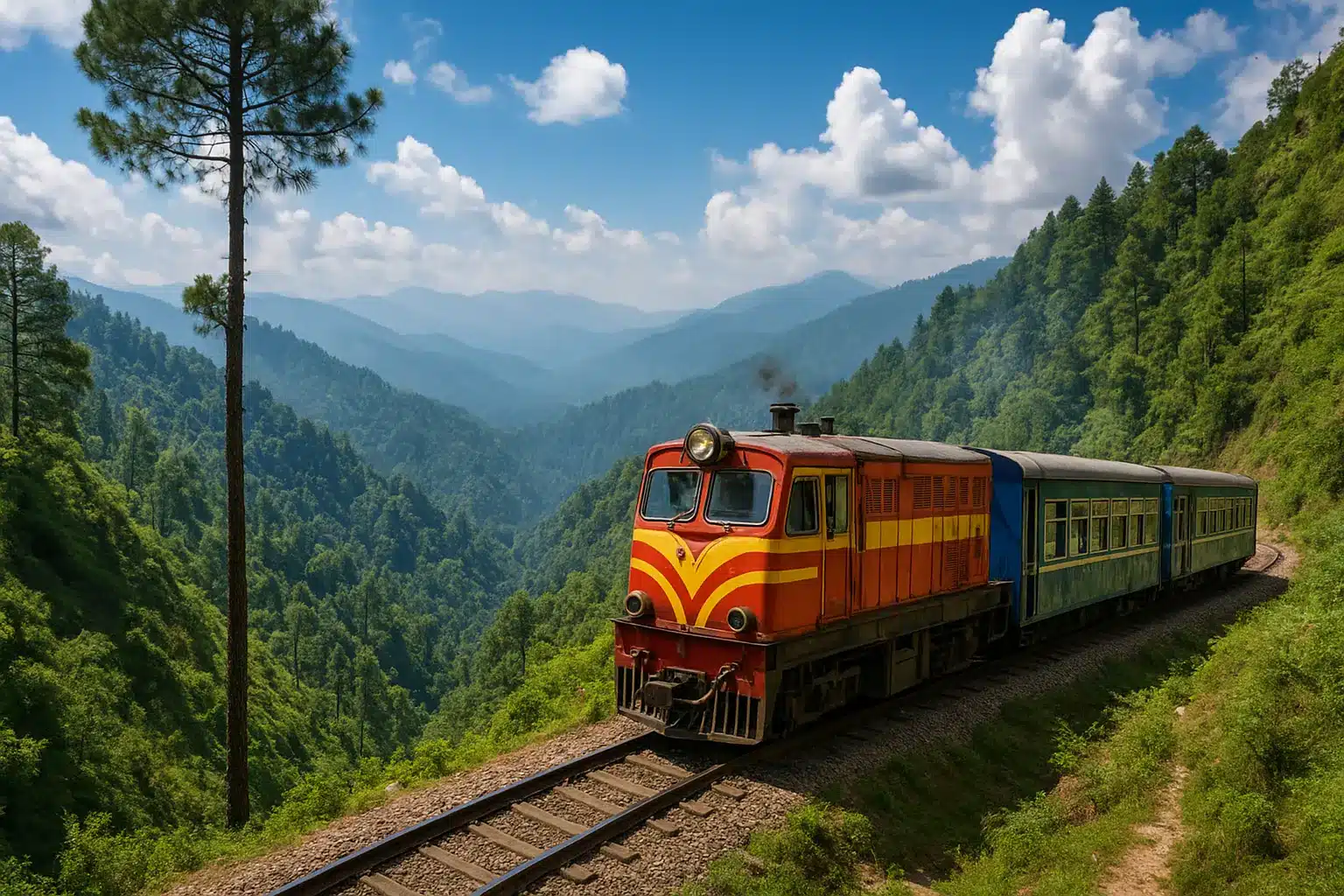
Kalka Shimla Railway History: The Story of India’s Most Scenic Mountain Train
The Kalka Shimla Railway (KSR) isn’t just a train route; it’s a living testament to India’s colonial engineering and a thrilling mountain adventure. This stunning 96-kilometer stretch connecting Kalka (Haryana) and Shimla (Himachal Pradesh) weaves through 102 tunnels, crosses 864 bridges, and navigates more than 900 sharp curves — showcasing incredible design and determination.
Since 2008, it’s been recognized as a UNESCO World Heritage Site, a proud symbol of India’s rich cultural and industrial heritage.
1. The Origin: A Dream Born in the British Era
By the late 19th century, Shimla had become the summer capital for British India, but reaching it was no easy feat thanks to the steep Himalayan landscape. The only way in was a long, exhausting trek by horse or bullock cart from Kalka, a small station on the Delhi–Ambala line.
To simplify access and make life easier for British officers, someone suggested building a railway line to Shimla back in 1847. But with such a tough terrain and hefty costs, progress stalled for years.

It wasn’t until 1898 that the Delhi–Ambala–Kalka Railway Company got to work, led by Chief Engineer Herbert Septimus Harington. Their mission? To construct one of the most challenging mountain railways worldwide.
2. Construction Challenges: Engineering on the Edge
Construction kicked off in 1898 and took three years to finish. Thousands of laborers faced landslides, freezing conditions, and steep cliffs to lay down the tracks.
- Gauge: 2 ft 6 in (762 mm)
- Total Length: 96.54 km
- Elevation Gain: From 656 m at Kalka to 2,076 m at Shimla
- Bridges: 864
- Tunnels: Originally 102 (now 103 including short tunnels)
The standout feature is the Barog Tunnel, which stretches over 1,143 m, making it the longest on the line. It’s also tied to a tragic tale of Colonel Barog, a British engineer who took his own life after making a miscalculation during its construction.

Despite all the challenges, they finished the line in November 1903, with a staggering cost of ₹1.71 crore — quite a lot back then.
3. The Grand Opening: November 1903
The Kalka–Shimla Railway finally welcomed passengers on 9 November 1903. The first train was filled with British officers who marveled at the breathtaking views of the Himalayas as they ride through pine forests and foggy valleys.
It quickly became the vital link for Shimla, transporting officials, tourists, and goods — soon earning the nickname “The Toy Train to the Queen of Hills.”

4. Engineering Marvels of the Kalka Shimla Railway
Even today, engineers study this railway for its brilliant design.
Curves and Gradients
The line features 917 sharp curves, with a steepest gradient of 1 in 33, enabling the train to ascend over 1,400 m in less than 100 km.
Tunnels and Bridges
The iconic Barog Tunnel stands out, while the multi-arched viaducts at Kandaghat, Solan, and Dharampur showcase Roman-style architecture.

Vintage Rolling Stock
The original coaches crafted by Metropolitan Carriage Works, Birmingham are still in operation today, blending British craftsmanship with local maintenance expertise.
5. UNESCO World Heritage Recognition
In July 2008, the Kalka–Shimla Railway earned its status as a UNESCO World Heritage Site, recognized alongside the Darjeeling and Nilgiri Mountain Railways under the category of “Mountain Railways of India.” UNESCO highlighted its exceptional value in navigating extreme landscapes while maintaining its functional integrity.
6. The Route: A Scenic Journey Through the Himalayas
| Station | Elevation (m) | Highlights |
|---|---|---|
| Kalka | 656 | Starting point near Chandigarh |
| Dharampur | 1,468 | British-era rest house |
| Barog | 1,531 | Famous tunnel and ghost tale |
| Solan | 1,502 | “Mushroom City” of India |
| Kandaghat | 1,425 | Scenic valley views |
| Taradevi | 1,844 | Temple hill station |
| Shimla | 2,076 | Queen of Hills, final stop |
7. Kalka Shimla Railway in Modern Times
Today, this line remains a popular tourist attraction. The Himalayan Queen Express and Shivalik Deluxe Express are its most famous services. In 2018, Indian Railways added Vista Dome coaches with glass ceilings for a better view of the landscape.

Even with all the updates, the charm of steam engines and vintage signals still draws in enthusiasts from around the globe. (Source: Indian Railways Official Site)
8. Tourism and Economic Importance
The railway plays a significant role in Himachal Pradesh’s tourism industry, connecting major tourist spots and supporting local economies. Each year, over 500,000 tourists hop on the toy train, which has even made appearances in Bollywood films and travel shows.
9. Interesting Facts You Probably Didn’t Know
- It’s listed in the Guinness Book of World Records for its steep altitude gain.
- With an average speed of 25–30 km/h, it’s perfect for taking in the scenic views.
- In winter, snowfall transforms the route into a picturesque white wonderland.
- It has been operated by Indian Railways Northern Division since 1903.
10. Related Heritage Railways
- Konkan Railway History – An engineering marvel along India’s western coast.
- Darjeeling Himalayan Railway
- Nilgiri Mountain Railway
11. Preserving the Past for Future Generations
Indian Railways and heritage organizations are working on digitally preserving old stations, bridges, and tunnels. There are plans for virtual tours and eco-tourism to enhance sustainability for future travelers.
Conclusion: The Legacy Continues
The Kalka Shimla Railway stands as a living monument to human spirit and India’s mountain heritage. Even after 120 years, its whistling engines and graceful curves continue to weave tales of the past. If you’re looking to experience a unique blend of history, nature, and engineering, this journey is one you won’t want to miss.
FAQ – Kalka Shimla Railway History
Q. When was the Kalka Shimla Railway constructed and by whom?
A. The Kalka–Shimla Railway was built from 1898 to 1903 by the Delhi–Ambala–Kalka Railway Company under British rule, with the design led by Chief Engineer Herbert Septimus Harington.






1 thought on “Kalka Shimla Railway History: The Story of India’s Most Scenic Mountain Train”