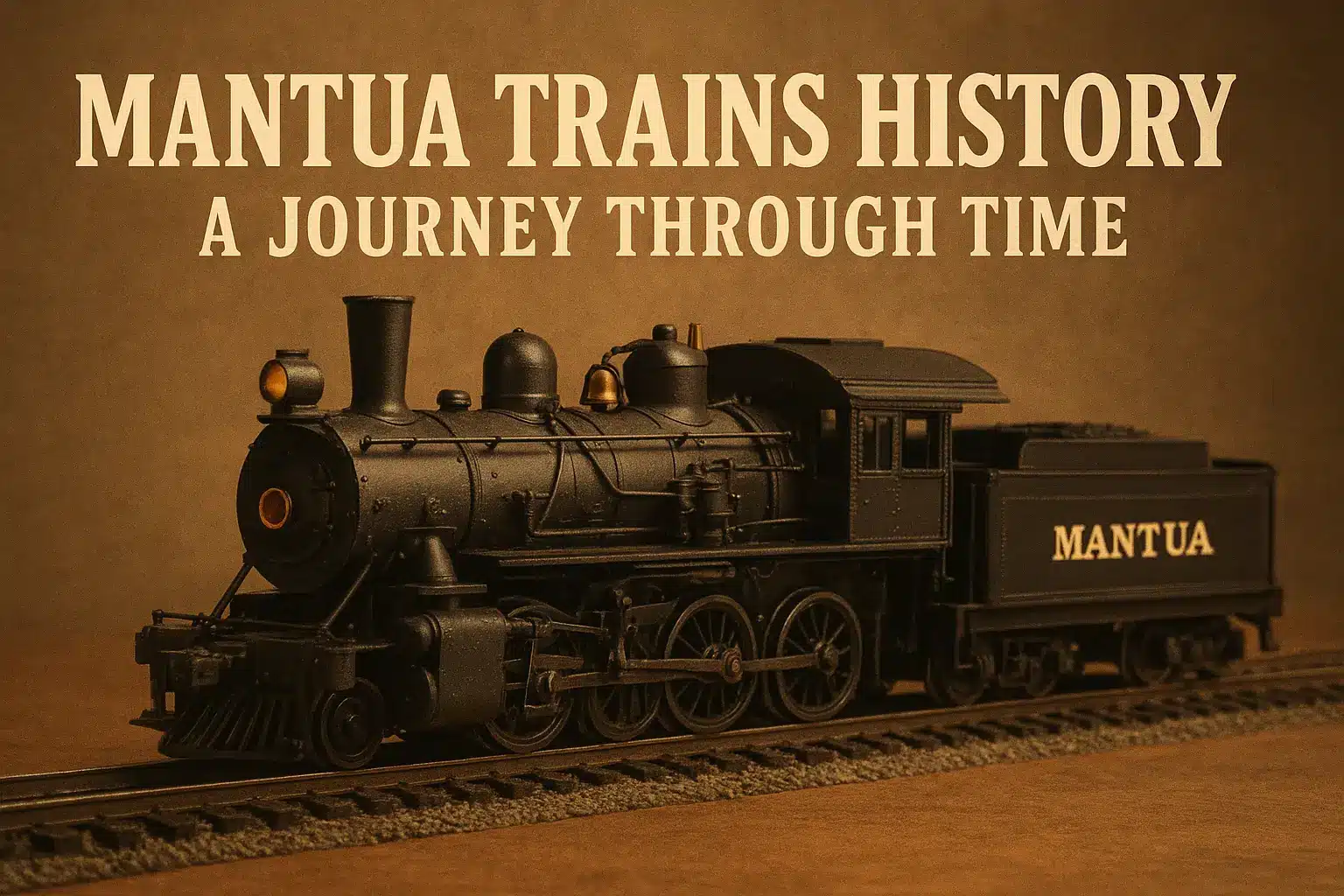
Mantua Trains History: A Journey Through Time
When we think of “Mantua trains,” we can explore two intriguing paths. One leads us to the model railroad legacy of Mantua and its connection with Tyco in the United States. The other takes us to the railways in and around the Italian city of Mantua, which played a key role in regional transport. In this article, we will look at the rich history of Mantua trains in both contexts, their development, influence, and why this history still matters to train enthusiasts and model railroaders today.
If you’re interested in Indian railways, regional lines, or model railroading, this article on Mantua trains history offers a solid foundation. It is perfect for visitors to tains.train360.co.in who enjoy railroading, modeling, and train culture.
1. Origins of the Mantua brand | mantua trains history
The story begins in the United States. Mantua Toy & Metal Products was founded in 1926 by John N. Tyler and his family. The company started by making toys and electric motors. By the 1930s, they had entered the toy train market. In 1935, they launched O-scale model trains, and by 1937, ready-to-run (RTR) train sets under the Mantua name began to appear.

2. The relationship between Mantua and Tyco
A crucial part of the story is how Mantua evolved into or merged with the Tyco brand. The company developed as follows:
- Tyler Manufacturing Company, later known as Tyco, was established around 1953 to focus on ready-to-run trains for younger hobbyists.
- During certain periods, Mantua and Tyco products were largely produced in the same facility. Some collectors claim that from 1957 to 1970, there was minimal difference between the two.
- In 1970, the toy company Tyco, which included Mantua’s train line by then, was bought by Consolidated Foods, later Sara Lee.
- In 1977, the Tyler family reacquired the Mantua product line and reintroduced a range under the “Mantua Classics” brand.
3. Key milestones in Mantua trains’ timeline
- 1926 – Mantua Toy & Metal Products founded.
- 1935 – Mantua introduces O-scale model trains.
- 1937 – Mantua offers ready-to-run train sets.
- 1950s – Plastic becomes more common in model trains; HO scale gains popularity.
- 1953/1954 – Tyler Manufacturing Company (Tyco) established.
- 1970 – Consolidated Foods acquires Tyco; production changes.
- 1977 – Tyler family reacquires Mantua train line and launches “Mantua Classics.”
- 1990s-2000s – Model Power purchases Mantua tooling; the hobby continues, but the original lines shrink.
4. Why Mantua trains matter for hobbyists
If you’re into model railroading, especially HO scale, Mantua trains hold distinct historical and collectible value. They are known for their sturdy construction, affordability, and ease of customization for hobbyists. Many collectors value their durability, while new hobbyists see them as affordable entry points into model railroading.

5. Mantua trains in the global context (with relevance to India)
While Mantua is an American brand, model train culture has a global reach. For Indian readers and enthusiasts:
- The idea of model trains and layouts parallels the growth of hobby culture in India.
- The shift from metal to plastic manufacturing reflects changes in the global toy industry.
- Indian model train fans often get inspiration from historical global brands like Mantua.
If you’re interested in Indian railways, check out our related feature on the Konkan Railway History to explore how real-life train engineering compares with the evolution of model trains.

6. Real-railway “Mantua” lines: the Italian connection
While Mantua model trains are American, the Italian city of Mantua also has a significant role in railway history.
6.1 Mantua railway station
The Mantova railway station opened in June 1873 and serves as a junction for several regional lines: Verona–Modena, Milan–Mantua, and Mantua–Monselice.

6.2 Key regional lines
- Pavia–Mantua railway: opened between 1866–1874, following the Second Italian War of Independence.
- Mantua–Monselice railway: completed around 1886, connecting Mantua to northern Italy’s trade routes.
7. Final thoughts: What the Mantua trains story teaches us
Whether you’re a collector, hobbyist, or simply interested in train history, the Mantua story offers important lessons:
- Innovation in design and manufacturing.
- The change in model railroading from kits to ready-to-run sets.
- Global impact on hobby culture and community building.
- Preserving train history through storytelling and collecting.
The tale of Mantua trains is more than just about toy locomotives. It is about passion, craftsmanship, and how both real and model trains bring people together across generations and locations.