Rail Transport in India: Your Complete 2025 Guide to Types, Advantages, Examples & Future Growth
Rail transport means moving people and goods on a network of tracks using trains and other rail vehicles. In India, it’s more than just a way to travel; it’s essential for national connectivity, trade efficiency, and economic integration.
If you’re looking into rail transport or specifically rail transport in India, you probably want to know:
- What rail transport really entails
- The main types of rail transport systems in India
- The major benefits of rail transport
- Examples of rail transport you encounter daily
- How rail transport stacks up against road transport
- Institutes that manage or study rail transport in India
This 2025 guide covers all these questions with clear, trustworthy, practical information aimed at students, travelers, exam takers, researchers, and railway fans.
Rail Transport in India: Growth and Current Overview
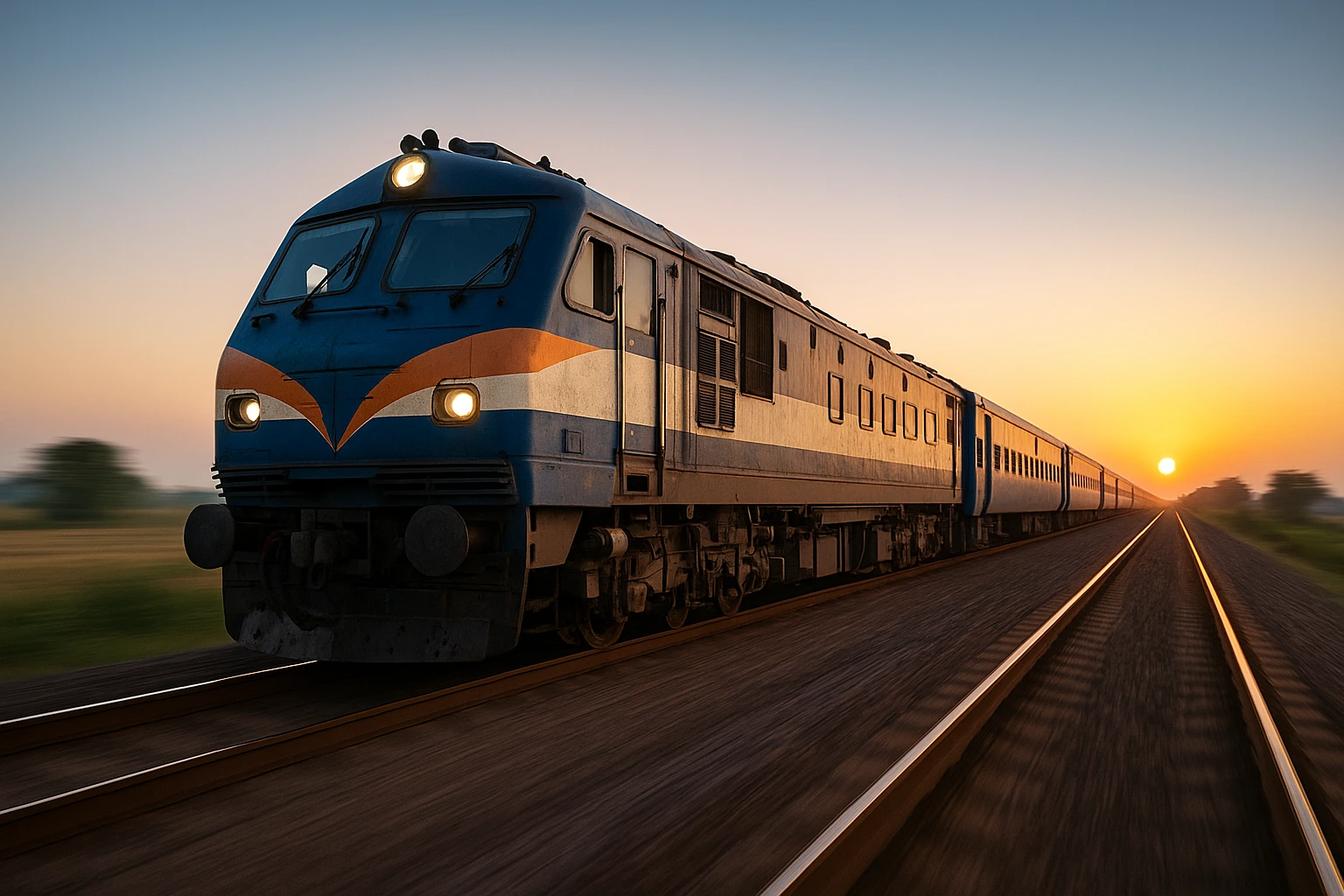
India boasts one of the world’s largest rail networks, primarily run by Indian Railways. From the steam engines of the 19th century to today’s semi-high-speed trains, rail transport in India has evolved to keep up with increasing passenger and freight demands.
Notable aspects of rail transport in India:

- More than 68,000 km of operational routes across the nation
- Daily passenger capacity surpassing 23 million
- Extensive freight corridors for coal, steel, cement, food grains, and container transport
- Connections to ports, industrial hubs, and logistics parks
Indian Railways is crucial for national development, linking rural areas with urban markets and offering affordable travel for millions.
For more detailed information about railways, updates, and tools, check out: Train360 – Railway Information & Tools
Types of Rail Transport
Grasping the types of rail transport helps you understand how different systems cater to diverse needs, like everyday travel and heavy cargo transportation.
1. Passenger Rail Transport
This type focuses on moving people over short, medium, and long distances.
- Express and Superfast Trains – Connecting major cities and state capitals
- Suburban / Local Trains – Commuter trains in cities like Mumbai, Chennai, and Kolkata
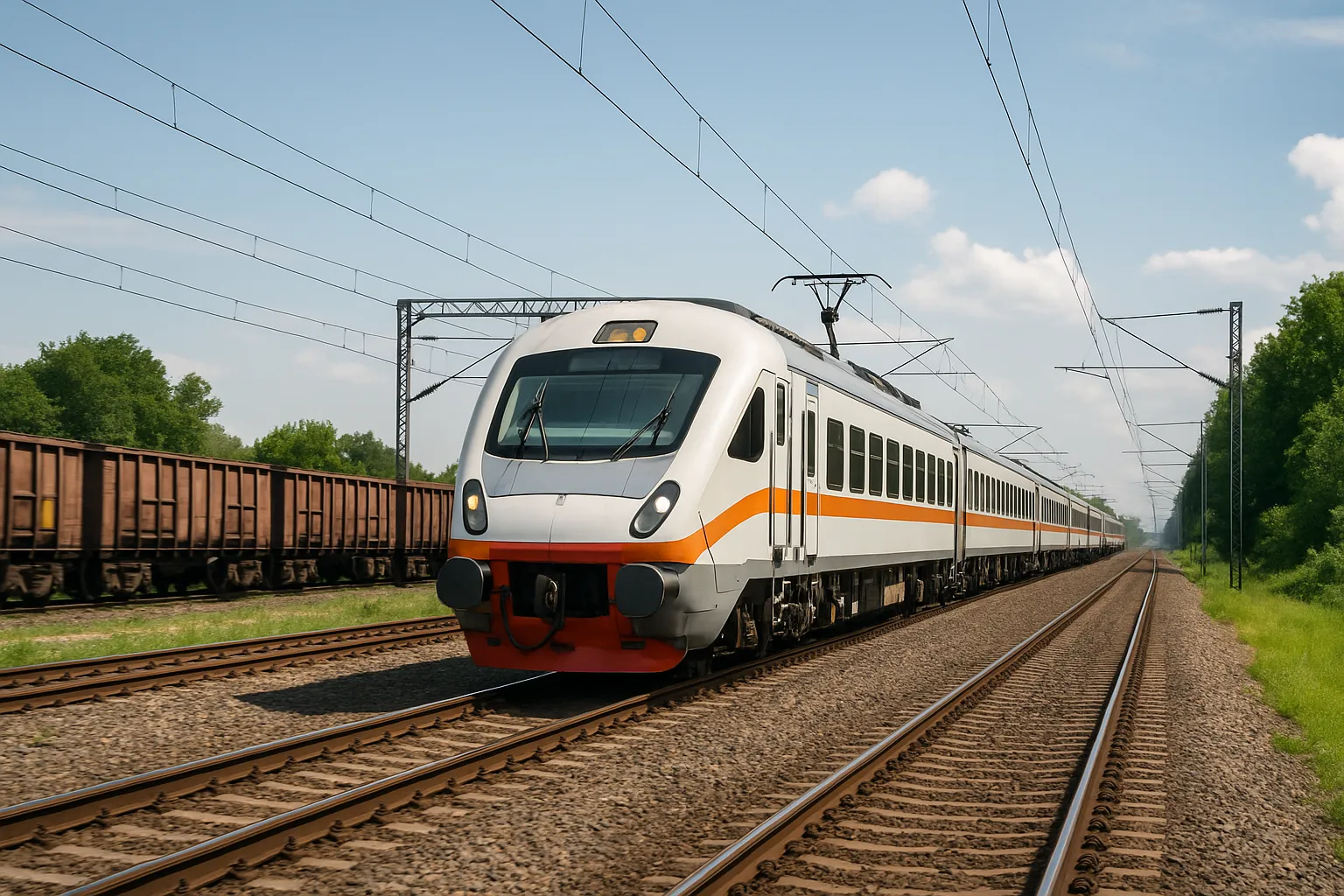
- Intercity EMUs – Electric Multiple Units for short to medium distance services with high frequency
2. Freight Rail Transport
This category is all about moving goods and raw materials.
- Bulk items like coal, iron ore, cement, and petroleum
- Containerized cargo between ports and logistics centers
- Agricultural products and food grains traveling between states
3. High-Speed and Semi High-Speed Rail
High-speed rail corridors are being created to shorten travel times on long distances.

- Vande Bharat Express – Semi-high-speed trains on existing routes
- Bullet Train Corridors – Dedicated high-speed rail projects in the works
4. Metro & Light Rail Systems
Metro and light rail systems are vital for urban transport, helping to ease traffic and reduce pollution.
- Delhi Metro
- Mumbai Metro
- Hyderabad Metro
- Other city metros currently being built or expanded
5. Industrial and Private Rail Networks
Various industries, mines, and ports often run their own rail sidings and branch lines to facilitate cargo movement, connecting directly to the main Indian Railways network for streamlined logistics.
5 Everyday Examples of Rail Transport
Here are 5 examples of rail transport showcasing how trains benefit both people and businesses:
- Vande Bharat Express – Semi-high-speed service linking major cities.
- Dedicated Freight Corridor (DFC) – Specialized railroads designed to move freight more quickly and reliably.
- Delhi Metro Rail – A rapid transit system used by lakhs of commuters every day.
- Mumbai Suburban Rail – One of the busiest commuter rail systems globally, serving as Mumbai’s lifeline.
- Rajdhani Express – Premium long-distance trains that connect the national capital with state capitals.
These examples illustrate how rail transport adapts to passenger needs, speed considerations, and cargo requirements.
Benefits of Rail Transport
The benefits of rail transport solidify its position as a crucial transport mode both in India and worldwide.
- Cost-effective for long distances – Cheaper per-kilometer compared to road transport for both passengers and freight.
- High carrying capacity – One train can transport hundreds of passengers or thousands of tonnes of goods.
- Energy efficient – Electric trains consume far less energy than road vehicles.
- Eco-friendly – Generates lower carbon emissions per passenger-km or tonne-km compared to road transport.
- Reduced traffic congestion – Moves bulk cargo off the roads, alleviating traffic on highways.
- Reliable schedules – Timetabled services make planning easier for passengers and industries alike.
These advantages ensure that rail transport remains a central part of India’s long-term transportation strategy.

Road vs. Rail Transport: Key Differences
Both road and rail transport are vital, but they serve distinct roles. Knowing their differences can help in selecting the right transport method for a specific journey or logistics need.
| Factor | Rail Transport | Road Transport |
|---|---|---|
| Speed on Long Routes | Tends to be faster and more consistent | Can be slower due to traffic and road conditions |
| Cost per km | More cost-effective for bulk and long-distance travel | Usually entails higher fuel and toll expenses over long distances |
| Carrying Capacity | Extremely high – can carry a large number of passengers or tons of freight | Limited based on vehicle capacity |
| Pollution | Lower emissions, particularly along electrified routes | Higher emissions due to fossil fuel reliance |
| Infrastructure | Relies on fixed tracks and stations | Utilizes flexible road networks and can access nearly any place |
| Suitability | Ideal for long-distance and bulk transport | Better for short distances and last-mile connectivity |
Institute of Rail Transport and Research Organizations
The advancement and modernization of rail transport depend on research, training, and standardization. Various institutions support innovation and policy development related to rail transport in India.
Key organizations include:
- Indian Railways Institute of Transport Management – Dedicated to transport planning, logistics, and management training.
- Research Designs and Standards Organisation (RDSO) – The research division of Indian Railways that develops standards, designs, and testing procedures.
- National Academy of Indian Railways – Offers training programs for railway officers and managers.
For a comprehensive look at railway research centers and institutions, you can check out: Railway Research Centre in India – Train360
How the Rail Transport System Operates: Step-by-Step
To better grasp rail transport, it’s helpful to understand the process from planning to operations.
- Track Infrastructure Planning – Involves surveying, route selection, land acquisition, and rail line design.
- Station and Signalling Setup – Building platforms, yards, control rooms, and modern signaling systems.
- Rolling Stock Deployment – Managing the procurement, maintenance, and deployment of locomotives, coaches, and wagons.
- Train Scheduling – Crafting timetables for passenger and freight services to avoid disruption.
- Ticketing and Passenger Management – Handling reservations, unreserved ticketing, station management, and onboard services.
- Real-time Monitoring – Observing train movements, managing delays, and prioritizing safety.
- Maintenance and Safety Audits – Regularly inspecting tracks, bridges, trains, and equipment to prevent accidents.
The Economic Impact of Rail Transport in India
Rail transport significantly influences the Indian economy.

- Agriculture – Facilitates timely transport of food grains and perishables from farms to markets.
- Industry – Aids the steel, coal, cement, and manufacturing sectors by providing reliable freight services.
- Tourism – Links tourist destinations and pilgrimage sites with affordable transportation options.
- Employment – Generates countless jobs directly and indirectly in operations, manufacturing, and services.
- Trade and Logistics – Lowers logistics costs, enhancing the competitiveness of Indian products.
Featured Snippet: Quick Definition of Rail Transport
What is Rail Transport?
Rail transport is a method of moving passengers and goods via trains that travel on fixed tracks. It’s an efficient, eco-friendly option, particularly suited for transporting large quantities over medium and long distances. In India, rail transport connects remote areas with major cities and supports daily commuting alongside heavy freight transportation.
Useful Internal Resources on Train360
To better leverage rail transport in India, explore these valuable resources on Train360:
- IRCTC Tatkal Automation Tool – Book Tatkal Tickets More Efficiently
- Railway Food Price List 2025–26 – Updated Rates for Passengers
- Train360 Home – Railway Guides, Tools & Updates
External Authoritative References
For more information on rail transport and Indian Railways, take a look at these reputable sources:
The Future of Rail Transport in India (2025–2035)
Looking ahead, the future of rail transport in India is all about speed, safety, and sustainability.
- Creating high-speed and bullet train corridors
- Modernizing stations to serve as multi-modal hubs
- Expanding dedicated freight corridors for swifter cargo transport
- Introducing green and hydrogen-powered locomotives
- Utilizing AI and data analytics for efficient traffic management and predictive maintenance
These efforts will make rail transport smarter, cleaner, and more comfortable over the next decade.
How Rail Transport Addresses Modern Travel and Logistics Challenges
In a vast and varied country like India, rail transport helps tackle multiple issues:

- Reduces reliance on imported fuel by increasing transport on electrified railways.
- Helps ease urban congestion through metro and suburban trains.
- Facilitates mass commuting with affordable fares and high-capacity trains.
- Decreases accident risks compared to crowded highways.
- Provides reliable schedules that help industries effectively organize logistics.
FAQs About Rail Transport in India
What is rail transport?
Rail transport involves trains moving along established railway tracks to carry passengers and goods, whether for short or long distances.
What are the main types of rail transport in India?
The main categories are passenger rail, freight rail, metro rail, high-speed or semi-high-speed trains, and industrial rail networks that serve factories and ports.
What are the benefits of rail transport?
Rail transport is cost-effective, energy-efficient, eco-friendly, and great for moving large quantities. It helps minimize road congestion and offers predictable schedules.
How does rail transport differ from road transport?
Rail transport operates on fixed tracks, carries more cargo, and is better suited for long distances, whereas road transport provides flexibility and is ideal for shorter distances and last-mile connections.
Is rail transport in India on the rise?
Absolutely. India is putting money into high-speed corridors, dedicated freight paths, station redevelopment, metro expansion, and greener technologies to enhance and expand rail transport.
Conclusion: The Continued Importance of Rail Transport in 2025
Rail transport remains a scalable and sustainable mobility solution for India. From enhancing rural access to bolstering industrial logistics, it continues to shape the nation’s economic and social landscape.
If you’re looking to plan better trips, gain insights for exams, or just keep up with new tools and regulations, diving into practical guides and tools is the best approach.
Start with:
- Train360 – Your Railway Information Hub
- IRCTC Tatkal Automation Tool
- Railway Food Price List 2025–26
By understanding how the rail transport system works today and how it’s evolving, you can make more informed travel, study, and business choices for the future.